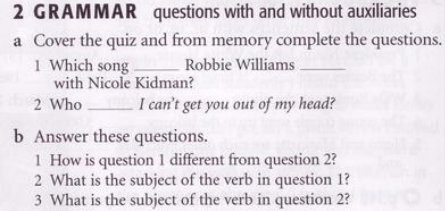
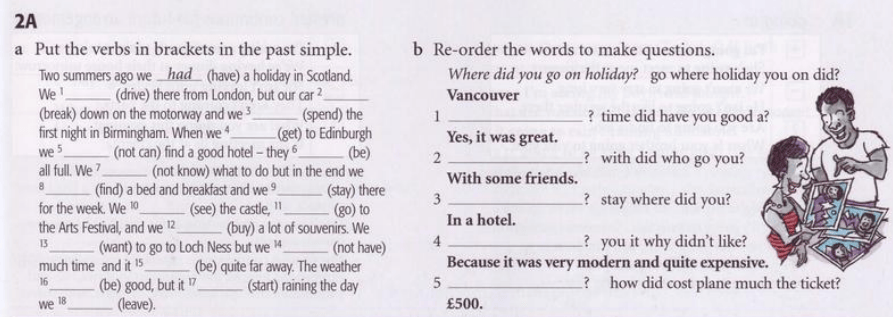
Which song did Robbie Williams sing with Nicole Kidman?
Who sangI can’t get you out of my head?
b.
Question 1 needs a helping verb (did) because we already know who did the action (Robbie Williams).
Question 2 doesn’t use a helping verb because the word Who is already the subject doing the action.
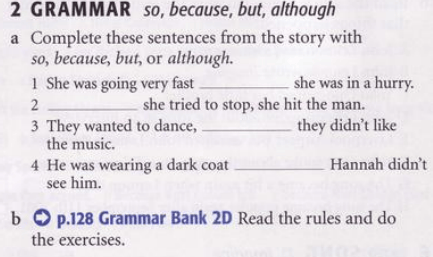
2. Robbie Williams
3. Who
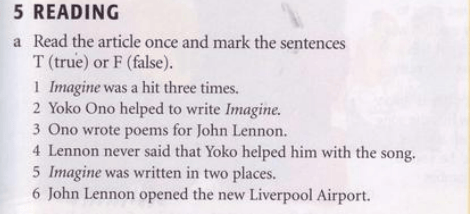
T
T
T
F
T
F
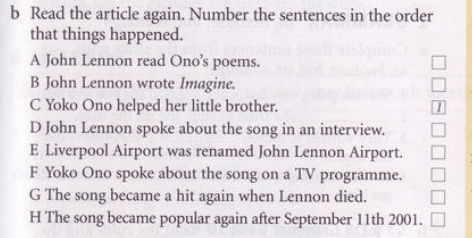
1- C
2- A
3- B
4- D
5- H
6- E
7- G
8- F
Text 6
Buses were introduced in Paris in 1820. In 1828 they were introduced in London by George Shillibeer, a coachbuilder who used the French name “Omnibus”, which came from Latin and meant «for all.» His omnibuses were driven by three horses and had seats for 22 passengers. In 1912 the new motor buses replaced the horse-driven buses.
Trams were introduced in the middle of the 19th century. As the rails were smoother than the roads, less effort was needed to pull a tram than a bus. The first trams were horse-driven, but later they were driven by electricity. The electric motor driving the tram was usually powered by electric current from overhead wires. Such wires are also used by trolley buses, which run on rubber tires and do not need rails.
Another form of transport used in London, Paris, Berlin, Moscow, and some other crowded cities is the underground railway. London’s first underground railway, called the Tube, was opened in 1863. The Moscow underground, which is considered to be the best and the most comfortable underground in the world, was opened in 1935.
1. Why was the first bus named «Omnibus»?
a) The constructor’s name was Omnibus.
b) The constructor named it Omnibus.
c) The constructors named it Omnibus.
2. What else besides the first buses was driven by horses, according to the text?
Homework— New English File: retell the text- p. 16, ex. 2(b), 3(a, b, c)- p. 17, ex. 1(a), 2(a), 3(a)- p. 147
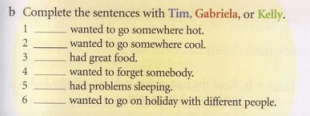
Kelly
Gabriela
Tim
Kelly
Gabriela
Tim
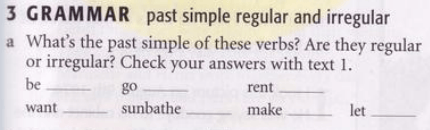
be- was/were- irregular
go- went- irregular
rent- rented- regular
want- wanted- regular
sunbathe- sunbathed- regular
make- made- irregular
let- let- regular
text-2
decided- decide
booked- book
got- get
sat- sit
argued- argue
Text-3
broke up- break up
decided- decide
told- tell
looked- look
saw- see
said- say
was- be
spent- spend
had- have
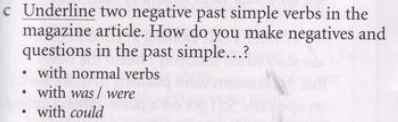
Negative examples:
We didn’tt want to go shopping.
He didn’t tell me.
Normal verbs:
negative- didn’t+base verb
questin- Did+subject+base verb?
Was/ Were:
negative- wasn’t/ weren’t
question- Was/ Were+ subject?
Could:
negative- Couldn’t+baseverb
question- Could+subject+base verb?
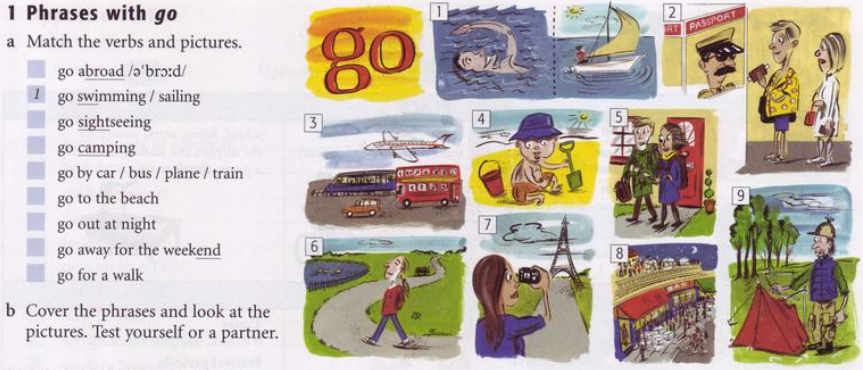
1- go swimming/ sailing
2- go abroad
3- go by car/bus/plane/train
4- go to the beach
5- go away for a weekend
6- go for a walk
7- go sightseeing
8- go out at night
9- go camping
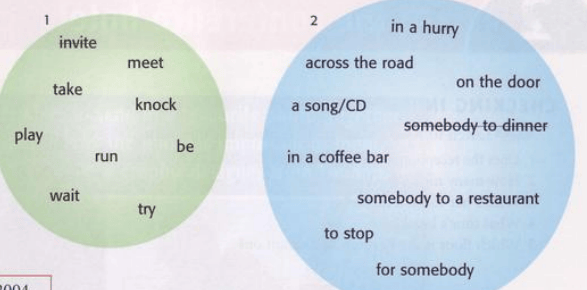
take- photos
buy- souvenirs
sunbathe- on the beach
have- a good time
spend- money/ time
rent- an apartment
walk- in the mountains/ around the town
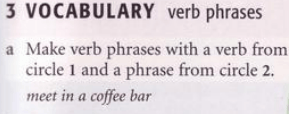
meet- friends
hire- a car
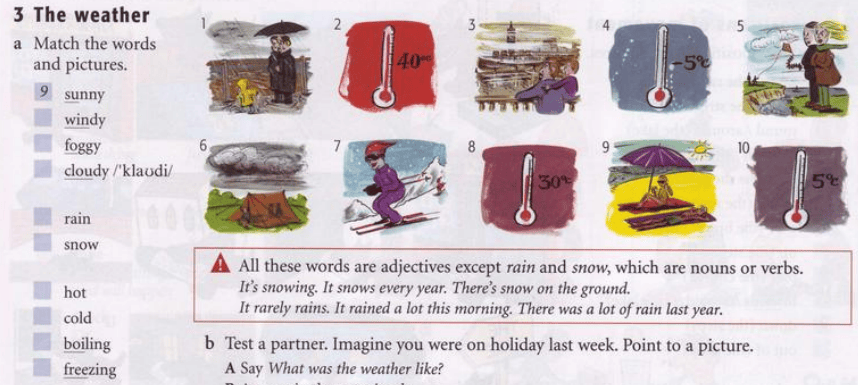
1- rain
2- boiling
3- foggy
4- freezing
5- windy
6- cloudy
7- snow
8- hot
9- sunny
10-cold
Text 4
On the coast of California, on top of a mountain, stands an enormous castle that looks as if it has been lifted out of the Middle Ages. In fact, the castle, called San Simeon, was built for William Randolph Hearst, and it is furnished with objects dating from different historical periods, which were transported from Europe.
It took thirty years to build the castle, and even then it was never completed. Throughout this time, over a hundred workmen were employed on the site, and the architect, Julia Morgan, was obliged to change the design as often as Hearst changed his mind. Rooms and whole floors were constructed but then had to be knocked down and rebuilt to please him.
Agents were sent all over Europe to find works of art to decorate the castle. Old furniture, paintings, and statues were bought and shipped to America.
Since Hearst’s death, San Simeon has been handed over to the American people, and eventually the contents will also be given to them. Unfortunately, they are not worth very much. Hearst’s agents were often deceived by art dealers, who sold them cheap imitations instead of real works of art.
1. The castle of San Simeon
a) was transported from Europe.
b) was built by William Randolph Hearst.
c) was decorated with works of art from Europe.
2. Why did it take a long time to build the castle?
a) Only a hundred workmen worked on it.
b) The owner did not know what he wanted.
c) It was badly designed.
3. Why did Hearst’s agents buy cheap imitations instead of real works of art?
a) Hearst did not want them to spend much money on real works of art.
b) Hearst’s agents were mean and cunning.
c) Hearst’s agents were cheated by dishonest art dealers.
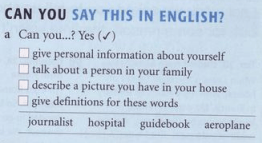
personal information- I was born in March 29, 2012 and my full name is Sofi Ohanyan
family- my family consists of 5 people, my parents, Rima and Onik, and my younger sibling, Natali and davit.
picture- we have a painting in our house of us me and my siblings. It very big, and our neighbor was the one who painted it. It’s a picture of us in formal dresses, and in the background we have a nature view of the garden, we were in.
Journalist – A person who collects and writes news.
Hospital – A place where sick or injured people get medical help.
Guidebook – A book that gives information about a place.
Aeroplane – A vehicle that flies in the sky and carries people from one place to another.
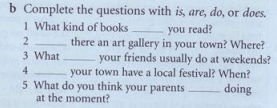
What kind of books do you read?
Is there an art gallery in your town? Where?
What do your friends usually do at weekends?
Does your town have a local festival? When?
What do you think your parents are doing at the moment?
Живое наследие это традиции, знания, музыка, танцы и блюда, которые люди сохраняют и передают следующим поколениям. Оно помогает сохранять культуру и историю разных народов.
-Каким образом передавались традиции в Центральной Азии?
В Центральной Азии традиции передавались от старших к младшим, от родителей к детям. Люди учили детей готовить национальные блюда, танцевать, заниматься ремёслами и соблюдать свои обычаи. Так традиции сохранялись на протяжении многих лет.
-Какое блюдо считается королем центральноазиатской кухни и как оно называется в разных странах?
Королём центральноазиатской кухни считается плов. В разных странах его называют по-разному: в Узбекистане — плов, в Таджикистане — оши палов, а в Казахстане и Кыргызстане тоже готовят свои варианты этого блюда. Плов готовят из риса, мяса, моркови и других ингредиентов. Он часто является главным блюдом на праздниках и семейных встречах.
-Чему способствовал Шелковый путь?
Великий шёлковый путь способствовал развитию торговли и обмену культурой между разными народами. По нему перевозили товары, распространяли знания, традиции и новые идеи. Благодаря этому люди узнавали больше о других странах и их культуре.
Лаваш это традиционный армянский хлеб, который известен не только в Армении, но и в других странах. В 2014 году он был включён в список нематериального культурного наследия ЮНЕСКО. Лаваш готовят из муки, воды и соли. Его раскатывают в очень тонкие листы и выпекают в специальной печи, которая называется тонир. Обычно лаваш пекут несколько человек вместе, поэтому это также семейная традиция.В Армении лаваш едят почти со всеми блюдами. Его используют для приготовления разных закусок и заворачивают в него сыр, зелень и другие продукты. Лаваш также играет важную роль на свадьбах и других праздниках. Я считаю что лаваш важная часть армянской культуры. Нужно сохранять эту традицию чтобы будущие поколения тоже знали, как его готовить и почему он так важен для нашего народа.
И написать в блоге,какую информацию вы из него узнали, что мы не затрагивали и не обсуждали на уроке.
После просмотра видео я узнала о разных объектах ЮНЕСКО, которые находятся в разных странах мира. Я узнала что в список входят не только старинные здания и памятники, но и красивые природные места. Мне было интересно увидеть, насколько они отличаются друг от друга. Я поняла что эти места имеют большую историческую и культурную ценность, поэтому их нужно сохранять. Больше всего мне понравилось что каждое место имеет свою историю и чем-то отличается от других.